EXHIBITION :

Lead_1

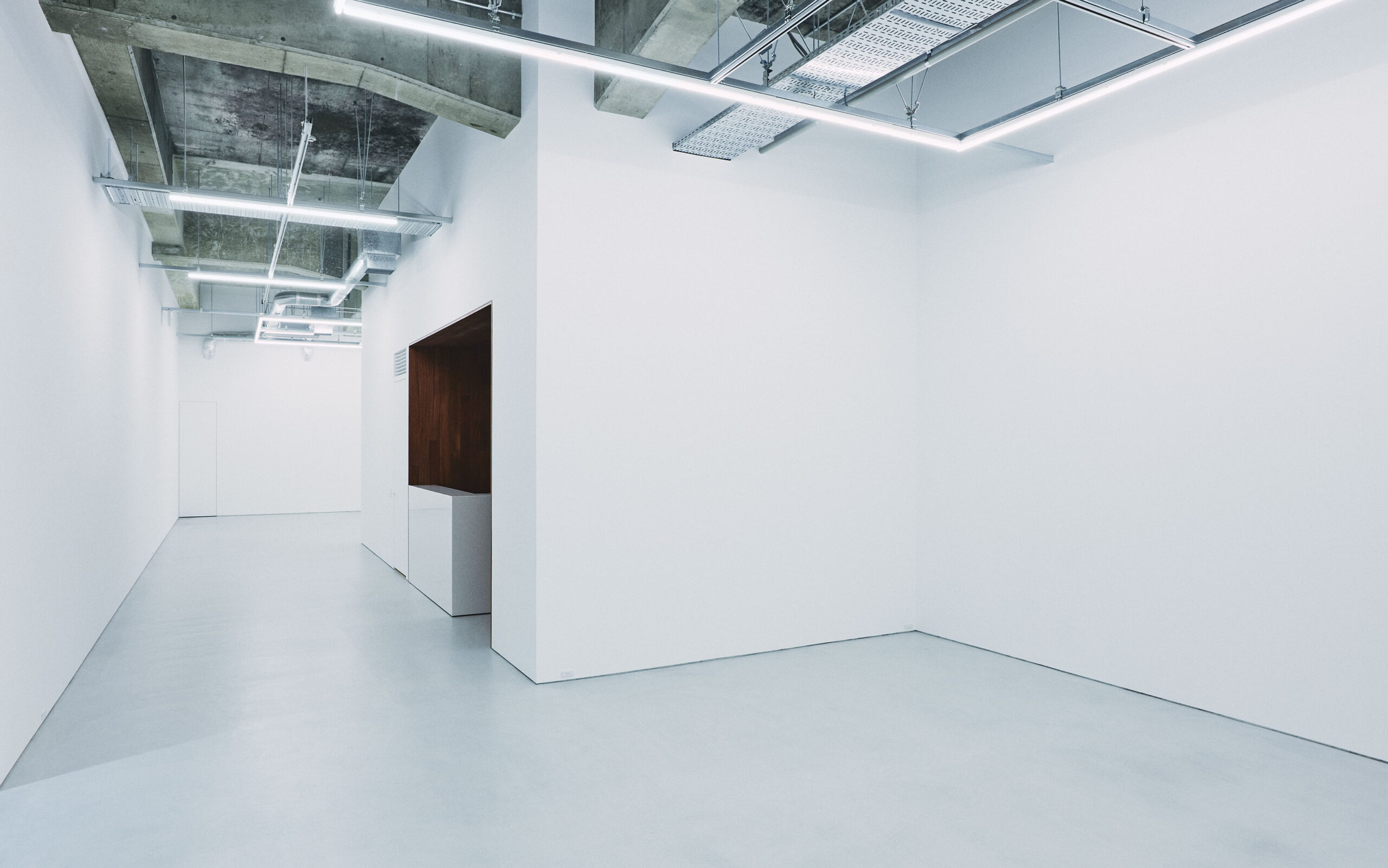
MU GALLERY is pleased to present “flow-chitecture —Form Without Hierarchy— ” by Yuya Saito 2/14(sat) to 2/23(mon).


ーYUYA SAITO-

After graduating from the University of Central Oklahoma and establishing his artistic career in Tokyo,
Saito is currently based in Brooklyn, New York, where he operates Saito Studio.
His practice is an ongoing exploration of the intersections between sculpture, architecture, and urban culture.
The foundation of his signature curved forms is deeply rooted in his personal history with skateboarding and street culture.
By fusing traditional bentwood techniques with the fluid, organic structures found within modern public spaces,
Saito has developed a unique visual language known as “flow-chitecture.”
His work serves as a meditative practice to decode the complexities of the contemporary city and peacefully reweave its fragmented narratives.

Comment_1


Photo_1

Credit_1

Lead_2

flow-chitecture —Form Without Hierarchy—

Historically, the skateboard ramp (the half-pipe) has been almost entirely excluded from serious discourse in art, architecture, and design. At best, it has been relegated to the periphery—viewed merely as a “plaything” for skaters or a “DIY phenomenon” of the streets. However, Saito identifies a profound potential in these marginalized structures, re-envisioning them as vital “urban sculptures” for the contemporary era. This exhibition marks a pioneering attempt to centralize the ramp—an object long overlooked by existing academic contexts—as a legitimate subject of artistic expression.

Currently based in the dense urban fabric of New York, Saito develops his work around this central inquiry. In the United States, the ramp is a truly public structure: hand-built, shared without discrimination, and etched into the landscape as a communal landmark. It embodies a philosophy diametrically opposed to traditional high-rise architecture, which historically sought to symbolize power and authority through vertical accumulation. In contrast, Saito proposes a structure that creates “Flow” along the horizon—an architecture shared among people. By extracting this peaceful ethos from the depths of skateboarding history, Saito has established a unique visual language: “flow-chitecture.”

Utilizing the curvature of the ramp as a formal foundation, his works—imbued with rhythm, dimensionality, and color—echo the pulse of the city itself. His process involves adapting traditional “bentwood” techniques used in furniture making to manipulate standard industrial lumber. By meticulously curving and cutting these rigid materials, Saito performs a symbolic liberation: transforming the linear, hard nature of architectural matter into organic forms that dissolve the stiffness of urban structures and release them from fixed meanings. This practice represents a hybridity of Japanese craftsmanship and American DIY spirit.

This exhibition is not a conventional street art practice defined by the dichotomy of “submission vs. resistance.” Instead, it is an experimental space that salvages the ideals of “inclusion” and “fluidity”—qualities desperately sought by modern society—from a structure once left outside the scope of concern. In an age dominated by rigid systems and boundaries, Saito’s organic forms offer a fundamental answer to how we might subjectively re-read and coexist within the gargantuan narrative of the city, presenting a new vision of the “public” that binds together our fragmented landscapes.

Comment_2


Photo_2

Credit_2

Information

flow-chitecture —Form Without Hierarchy—

YUYA SAITO

2026.2.14 sat – 2026.2.23 mon

12:00 pm – 18:00 pm

Open dailly

Information_Comment

EXHIBITION :

Lead_1

MU GALLERY is pleased to present “flow-chitecture —Form Without Hierarchy— ” by Yuya Saito 2/14(sat) to 2/23(mon).


ーYUYA SAITO-

After graduating from the University of Central Oklahoma and establishing his artistic career in Tokyo,
Saito is currently based in Brooklyn, New York, where he operates Saito Studio.
His practice is an ongoing exploration of the intersections between sculpture, architecture, and urban culture.
The foundation of his signature curved forms is deeply rooted in his personal history with skateboarding and street culture.
By fusing traditional bentwood techniques with the fluid, organic structures found within modern public spaces,
Saito has developed a unique visual language known as “flow-chitecture.”
His work serves as a meditative practice to decode the complexities of the contemporary city and peacefully reweave its fragmented narratives.

Comment_1


Photo_1

Credit_1

Lead_2

flow-chitecture —Form Without Hierarchy—

Historically, the skateboard ramp (the half-pipe) has been almost entirely excluded from serious discourse in art, architecture, and design. At best, it has been relegated to the periphery—viewed merely as a “plaything” for skaters or a “DIY phenomenon” of the streets. However, Saito identifies a profound potential in these marginalized structures, re-envisioning them as vital “urban sculptures” for the contemporary era. This exhibition marks a pioneering attempt to centralize the ramp—an object long overlooked by existing academic contexts—as a legitimate subject of artistic expression.

Currently based in the dense urban fabric of New York, Saito develops his work around this central inquiry. In the United States, the ramp is a truly public structure: hand-built, shared without discrimination, and etched into the landscape as a communal landmark. It embodies a philosophy diametrically opposed to traditional high-rise architecture, which historically sought to symbolize power and authority through vertical accumulation. In contrast, Saito proposes a structure that creates “Flow” along the horizon—an architecture shared among people. By extracting this peaceful ethos from the depths of skateboarding history, Saito has established a unique visual language: “flow-chitecture.”

Utilizing the curvature of the ramp as a formal foundation, his works—imbued with rhythm, dimensionality, and color—echo the pulse of the city itself. His process involves adapting traditional “bentwood” techniques used in furniture making to manipulate standard industrial lumber. By meticulously curving and cutting these rigid materials, Saito performs a symbolic liberation: transforming the linear, hard nature of architectural matter into organic forms that dissolve the stiffness of urban structures and release them from fixed meanings. This practice represents a hybridity of Japanese craftsmanship and American DIY spirit.

This exhibition is not a conventional street art practice defined by the dichotomy of “submission vs. resistance.” Instead, it is an experimental space that salvages the ideals of “inclusion” and “fluidity”—qualities desperately sought by modern society—from a structure once left outside the scope of concern. In an age dominated by rigid systems and boundaries, Saito’s organic forms offer a fundamental answer to how we might subjectively re-read and coexist within the gargantuan narrative of the city, presenting a new vision of the “public” that binds together our fragmented landscapes.

Comment_2


Photo_2

Credit_2

Information

flow-chitecture —Form Without Hierarchy—

YUYA SAITO

2026.2.14 sat – 2026.2.23 mon

12:00 pm – 18:00 pm

Open dailly

Information_Comment

Lead_1

MU GALLERY is pleased to present “flow-chitecture —Form Without Hierarchy— ” by Yuya Saito 2/14(sat) to 2/23(mon).


ーYUYA SAITO-

After graduating from the University of Central Oklahoma and establishing his artistic career in Tokyo,
Saito is currently based in Brooklyn, New York, where he operates Saito Studio.
His practice is an ongoing exploration of the intersections between sculpture, architecture, and urban culture.
The foundation of his signature curved forms is deeply rooted in his personal history with skateboarding and street culture.
By fusing traditional bentwood techniques with the fluid, organic structures found within modern public spaces,
Saito has developed a unique visual language known as “flow-chitecture.”
His work serves as a meditative practice to decode the complexities of the contemporary city and peacefully reweave its fragmented narratives.

Comment_1


Photo_1

Credit_1

Lead_2

flow-chitecture —Form Without Hierarchy—

Historically, the skateboard ramp (the half-pipe) has been almost entirely excluded from serious discourse in art, architecture, and design. At best, it has been relegated to the periphery—viewed merely as a “plaything” for skaters or a “DIY phenomenon” of the streets. However, Saito identifies a profound potential in these marginalized structures, re-envisioning them as vital “urban sculptures” for the contemporary era. This exhibition marks a pioneering attempt to centralize the ramp—an object long overlooked by existing academic contexts—as a legitimate subject of artistic expression.

Currently based in the dense urban fabric of New York, Saito develops his work around this central inquiry. In the United States, the ramp is a truly public structure: hand-built, shared without discrimination, and etched into the landscape as a communal landmark. It embodies a philosophy diametrically opposed to traditional high-rise architecture, which historically sought to symbolize power and authority through vertical accumulation. In contrast, Saito proposes a structure that creates “Flow” along the horizon—an architecture shared among people. By extracting this peaceful ethos from the depths of skateboarding history, Saito has established a unique visual language: “flow-chitecture.”

Utilizing the curvature of the ramp as a formal foundation, his works—imbued with rhythm, dimensionality, and color—echo the pulse of the city itself. His process involves adapting traditional “bentwood” techniques used in furniture making to manipulate standard industrial lumber. By meticulously curving and cutting these rigid materials, Saito performs a symbolic liberation: transforming the linear, hard nature of architectural matter into organic forms that dissolve the stiffness of urban structures and release them from fixed meanings. This practice represents a hybridity of Japanese craftsmanship and American DIY spirit.

This exhibition is not a conventional street art practice defined by the dichotomy of “submission vs. resistance.” Instead, it is an experimental space that salvages the ideals of “inclusion” and “fluidity”—qualities desperately sought by modern society—from a structure once left outside the scope of concern. In an age dominated by rigid systems and boundaries, Saito’s organic forms offer a fundamental answer to how we might subjectively re-read and coexist within the gargantuan narrative of the city, presenting a new vision of the “public” that binds together our fragmented landscapes.

Comment_2


Photo_2

Credit_2

Information

flow-chitecture —Form Without Hierarchy—

YUYA SAITO

2026.2.14 sat – 2026.2.23 mon

12:00 pm – 18:00 pm

Open dailly

Information_Comment

NEWS

2026.1.28

SHETA, Ryohei Yamashita, Ryota Shiga, Mio Okazaki and MIU will exhibit at MU GALLERY booth in Art Fair Tokyo 2026.

We are waiting for your visit!

【 Date 】 2026.3.13 fri – 2026.3.15 sun [ 11:00 am – 7:00 pm (15th sun 11:00am-5:00pm)]

PlaceTokyo International Forum Lobby Gallery L009 | 3-5-1 Marunouchi, Chiyoda-ku, Tokyo, Japan

2025.5.27

MU GALLERY is pleased to present “Every day is a good day.” by Ryota Shiga 6/7(sat) to 6/22(sun).

Opening reception “Otoeza” will be held on the first day, June 7(Sat.), from 16:00 to 18:00.

What is “Otoeza”?
A new art performance in which two painters and a musician fuse the digital and analog worlds to weave a story.


We are expressing a moment in time
Like the sun shining through the trees
Like the sound of leaves on leaves
Like the sun changing its shape


We hope you enjoy the all overlapping art processes.


On the second day, June 8 (Sun.), “Otoeza Trial Session” will be held from 12:00 to 15:00.

It is a free admission experience.

Please come one or two
With your mother or father
With a friend
With strangers
Let’s draw pictures together and have fun!
※Please come in clothes you don’t mind getting dirty.
2025.2.25

SHETA, Ryusuke Sano and Ryota Shiga will exhibit at MU GALLERY booth in Art Fair Tokyo 2025.

We are waiting for your visit!

【 Date 】 2025.3.7 fri – 2025.3.9 sun [ 11:00 am – 7:00 pm ]

【 Place 】 Tokyo International Forum Lobby Gallery L002 | 3-5-1 Marunouchi, Chiyoda-ku, Tokyo, Japan